

Billboards: Still Big. Still Misunderstood.
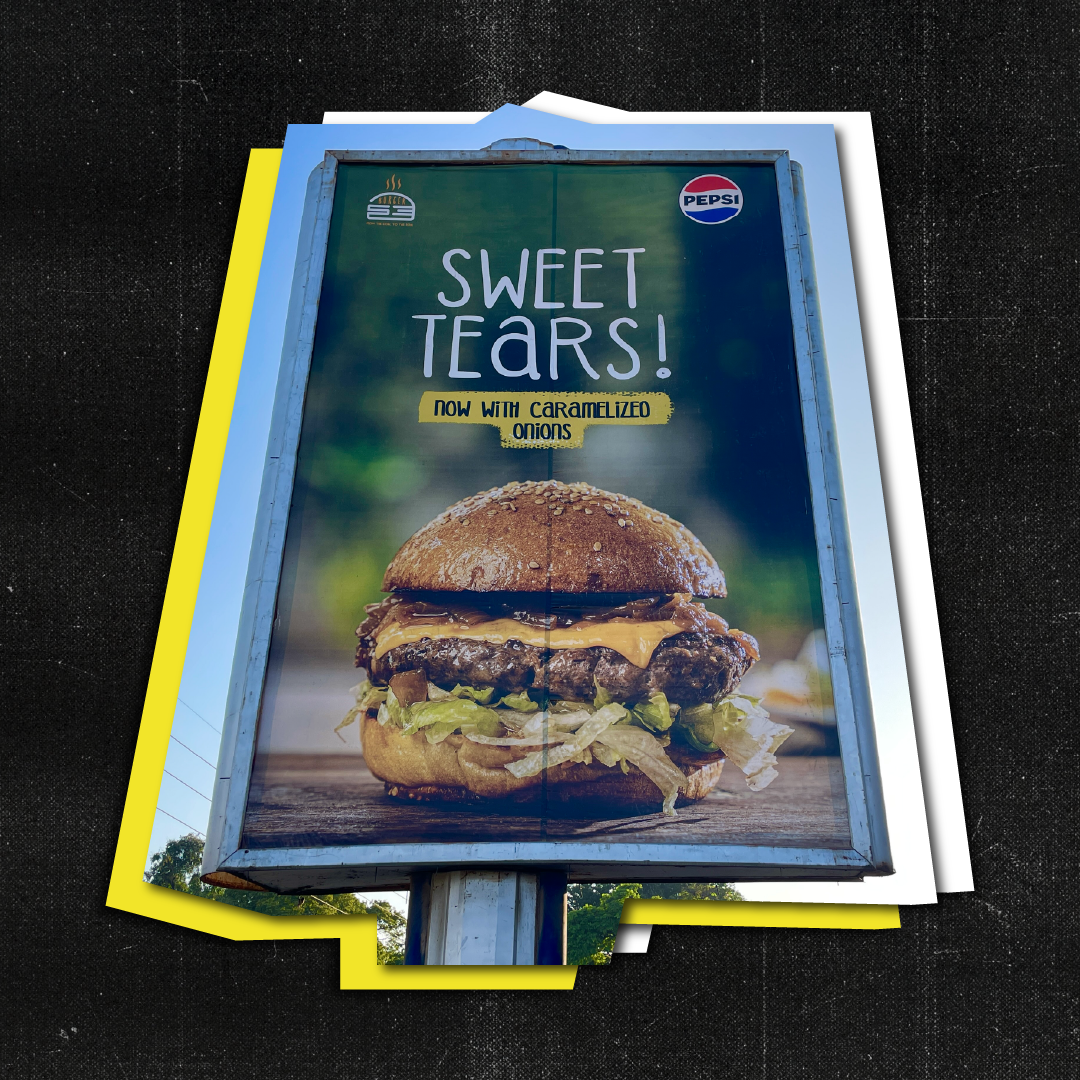
Billboards are a form of Out‑of‑Home advertising, OOH for short, which includes anything from roadside posters to digital screens in urban areas. It might be one of the oldest marketing formats, but it’s far from obsolete.
Billboards continue to deliver massive reach: According to IMARC Group, the global OOH market size reached $41 billion in 2024 and is projected to grow to $68 billion in 2033. The impact is even more pronounced in emerging markets, Africa included; in many countries, OOH ranks just behind radio in ad effectiveness . The reason is simple: they’re hard to ignore. When designed thoughtfully, billboards remain a powerful vehicle for brand presence.
Yet too often, their strengths are undermined by misunderstanding. Many times we have treated billboards like mini‑web pages, cramming in calls to action, lists, even full legal mechanics; forgetting that billboards aren’t meant to convert on sight. That insight sparked the reflections I share below; ideas to guide smarter billboard use.

1. Limit your message to six or seven words
Research shows people glance at a billboard for just 3–5 seconds, and some studies extend that to six seconds on average. If your message takes longer, it simply doesn’t register. That means you’ve got room only for a punchy headline, six short words max, plus your logo and perhaps a site or phone number. Anything more becomes noise. In short: if it doesn’t land in six seconds, it doesn’t land.
2. Use them to build awareness, not to pitch
Billboards aren’t direct‑response channels. Instead, they solidify brand presence through what marketers call aided and unaided awareness. A recent literature review by WiseGuy Reports found that billboard ads contribute significantly to brand recall, even more so when used alongside social media. In fact, 71% of consumers notice roadside billboards, and 98% see at least one each week . That level of exposure strengthens brand equity, making your brand top‑of‑mind long before someone searches for you. That’s the quite strength of billboards, they remind people you exist, again and again.
3. Let them signal your credibility
While doing research in rural Zanzibar in 2018 for Zantel (present-day Yas Tanzania), I witnessed a powerful phenomenon: people trusted a message more if it appeared on a billboard. My colleagues and I, Ndekia (Pablo) D. S. M, Ziada Abeid and Catherine Mabula heard time and again that “if it's on a billboard, it must be real.” That experience confirmed the theory that large-format advertising is a signal of legitimacy and credibility. Investment in billboards tells the world you’re serious, and that builds brand equity. Studies in marketing literature show that traditional and local advertising boost perceived quality and value. In short, big placements build big trust, so use them effectively.
4. Skip QR Codes
Yes, QR adoption is rising, but from a moving car? Almost never. Even pedestrians rarely scan billboard QR codes, simply because the context doesn’t allow it. Drivers don’t slow down, and pedestrians passing through are unlikely to look up and scan as they walk by. The result is that QR codes usually create visual clutter: trading clarity for the illusion of interactivity. Ask yourself: how many billboard QR codes have you actually scanned? Even on campaigns you helped create?
5. Leave promo mechanics off the board
Recently in Dar es Salaam, while researching this piece, I spotted several billboards packed with mechanics, "show this code," "text X to Y," “valid till…” and more. To read them, I had to park and walk over just to decode the fine print. And that only happened because I was writing this article. The normal driver and pedestrian won’t make such allowances. If you need to communicate detailed campaign terms, give people a link or a follow‑up channel. On the billboard, keep it clean, keep it brand.
These aren’t rules set in stone. They’re working reflections, ideas that come to mind as I pass billboard after billboard, noticing what sticks and what fades. I’ve made the same mistakes I now critique. That’s why these lessons, while simple, matter to me. They’ve been shaped by time, by research, and by the view from the passenger seat.
Billboards work best when they’re bold, brief, credible reminders, not direct‑response flyers. They’re not meant to sell in‑the‑moment; they’re intended to plant a seed and remembered when it matters.
So, what do you think?
I’d love to hear your stories: have you seen a billboard that nailed it or just missed the mark? Let’s #LearnTogether.
